Removal advice usually arrives as a single warning: do not peel. That is true, but incomplete, because the right removal decision also depends on when. A set in Conover lives through seasons, lake weekends, holiday photographs, and work cycles, and planning removals on a calendar, instead of in a frustrated moment at the bathroom sink, is what separates nails that stay healthy all year from nails that spend every spring growing out damage. Think of this as a maintenance calendar for the off part of wearing nails.
The yearly removal calendar
| When | Typical situation | Removal move that fits |
|---|---|---|
| Every 2 to 3 weeks | Regular fill cycle on acrylic or dip | No full removal. Lifted edges only are filed away at the fill; the set continues. |
| Every 2 to 3 fills | Product layered, shape drifting, natural nails unseen for months | Full soak-off reset at Elena Nail Spa, inspection of all ten nails, then a fresh set. |
| Before a big event set | Wedding, reunion, or photo-heavy holiday set planned | Soak off the old set a few days ahead, rest and oil the plates, build the event set on a clean foundation. |
| Late summer | Weeks of pool, lake, and sunscreen have loosened edges | Remove any set with widespread lifting rather than sealing water underneath it for fall. |
| Deep winter | Dry air, brittle natural nails, a planned bare stretch | Soak off gently, keep nails short and oiled; winter is the kindest season for a damage grow-out. |
| Immediately, any season | Green or dark patch under a nail, pain, a break low on the plate | Off now, that nail bare until it grows clear or has been checked. Calendar yields to symptoms, always. |
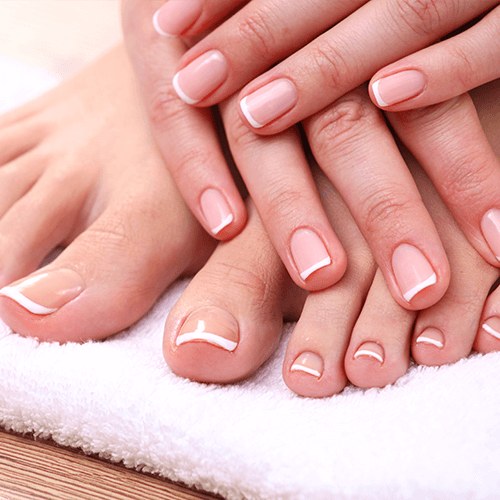
What proper soak-off looks like, whenever it happens
The steps do not change with the season. The top layer is filed to break the seal, acetone-soaked cotton is wrapped on each nail, and time does the work: about 10 to 15 minutes for gel polish, often 20 or more for dip and acrylic, with a second round for stubborn nails. Softened product is pushed off gently with a wooden stick. Resistance is answered with more soaking, never with force, because the force is precisely what tears the stacked keratin layers of the nail plate and creates the thin, bendy nails people then blame on the product itself. A wash, a careful shape, and cuticle oil finish the job, and the pale look right after is dehydration that fades within a day or two.
The moments the calendar warns you about
Peeling almost never happens on schedule; it happens at 11 p.m. before a trip, in the car, or at a desk when a lifted corner starts catching. The calendar defense is to never let a set reach that state before a high-pressure week. If a trip or event is coming and your set is near the end of its cycle, book the fill or the removal before you leave, even if it is a few days early. The other danger moment is the impatient home removal of thick product: dip and acrylic soak slowly, and the midway point, half-softened and tempting, is where prying does its damage. Set a timer, keep wraps wet, and treat a second soak as the plan rather than a failure.
Bare stretches, used well
A planned bare period is a tool, not a punishment. Use it when plates feel thin or flexible after removal, when white torn patches show where an old set was forced, or simply when your Conover winter is full of work that destroys sets anyway. Keep nails trimmed short so the damaged portion leaves quickly, oil daily, and protect hands with gloves for cleaning. Healthy new growth shows at the cuticle within weeks, and because a fingernail needs several months to replace itself fully, a bare stretch started in January delivers genuinely renewed nails by late spring, right on the calendar's schedule.
Common questions
How far ahead of an event should I remove an old set?
Two to four days works well: time for a rest and oil, and for the new set to be built two to three days before the event itself. Removing the same morning leaves no margin if a nail needs attention.
Is a winter break actually better for damaged nails?
It is practical rather than magical: sets get less wear from water and sun in winter, and you are less tempted to cut the break short for an occasion. The growth itself proceeds at the same pace.
Can I soak off just the one bad nail mid-cycle?
Yes, and for discoloration or a low break you should. One nail can be removed, inspected, and left bare or rebuilt while the rest of the set continues, as long as the others are checked for lifting too.
Photos in this guide are representative stock images.
← All guides from Elena Nail Spa← Back to Elena Nail Spa